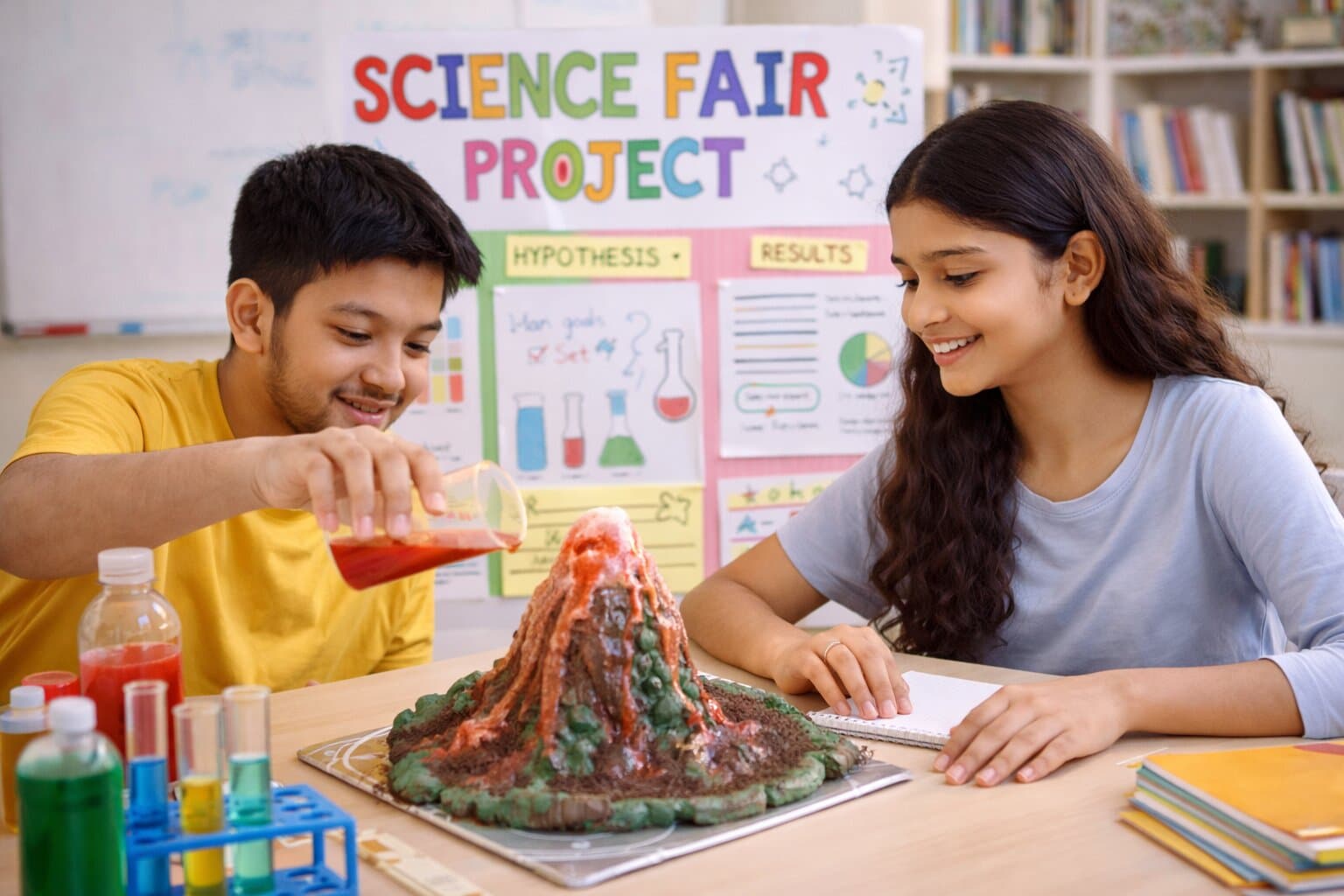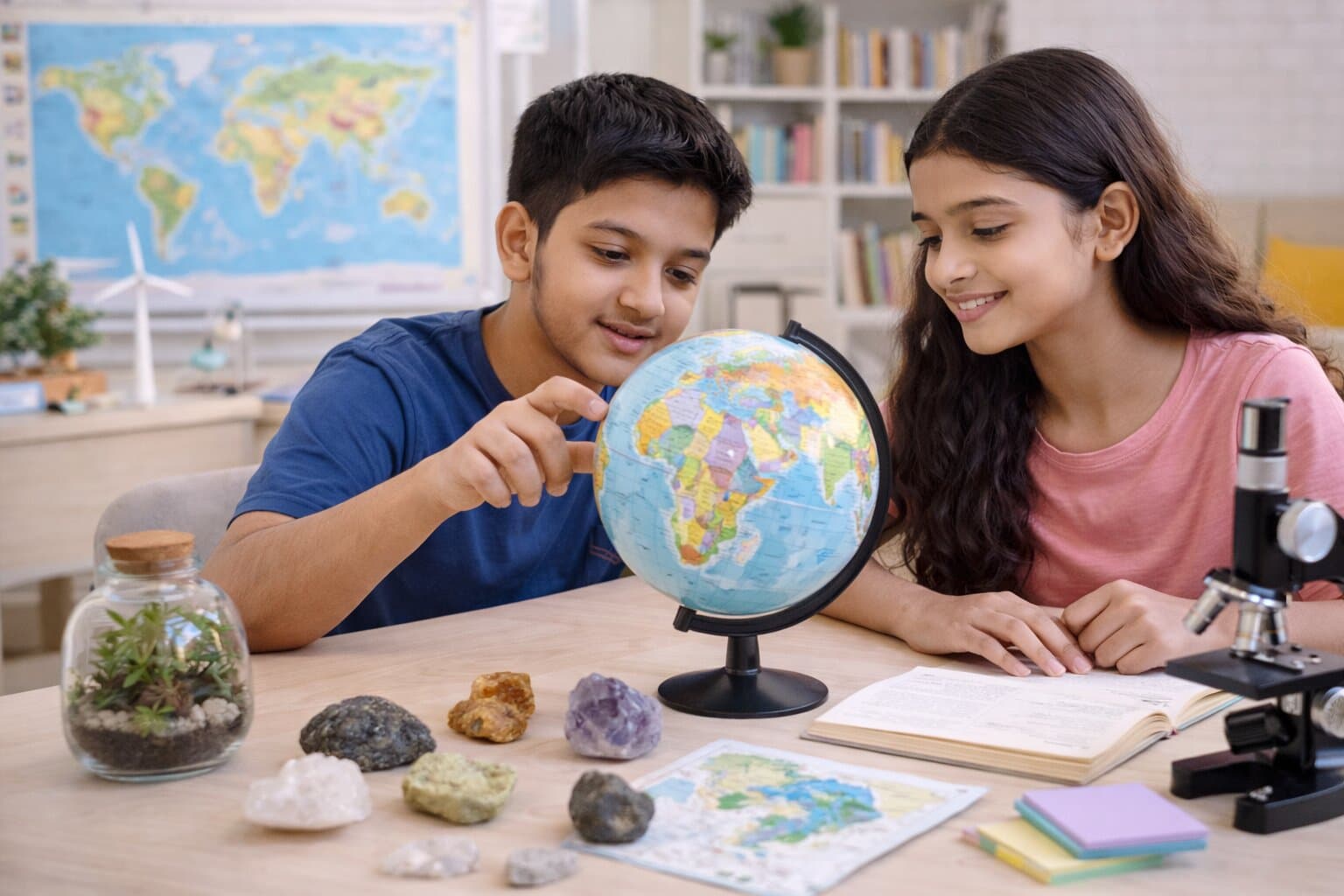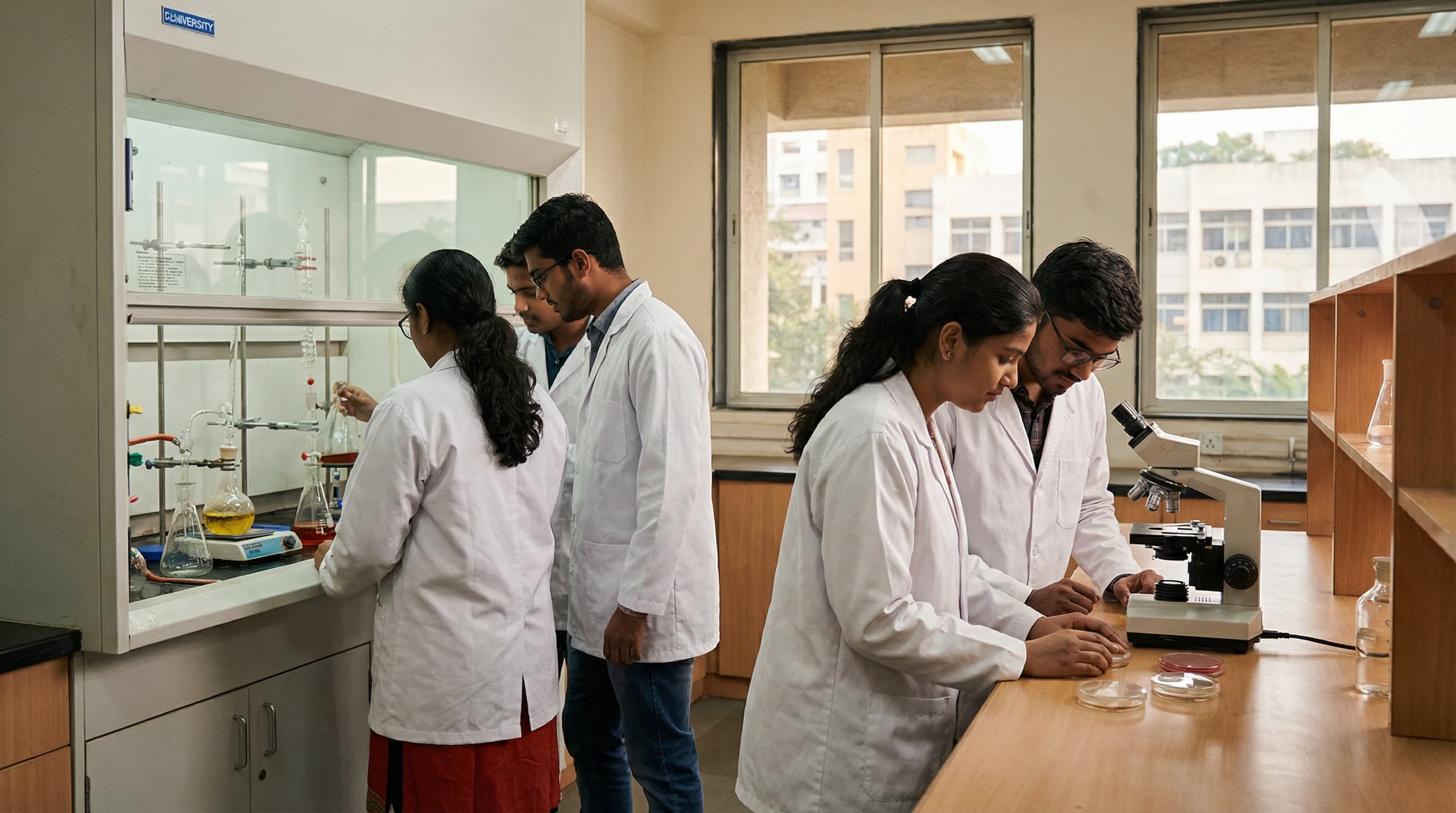
Science education varies significantly across different countries, with each nation following its own curriculum standards, teaching methodologies, and assessment approaches. From hands-on experiments in the United States to the structured National Curriculum in the United Kingdom, understanding these differences helps parents support their children's scientific learning. This comprehensive guide explores how Science is taught from Grade 1 to Grade 10 across seven major educational systems and explains how GuruForU's AI-powered platform can help your child excel in science regardless of their location or curriculum.
The Universal Language of Science: Understanding Curriculum Differences
While science itself is universal—the laws of physics, chemistry, and biology are the same everywhere—how science is taught varies dramatically across countries. Each educational system has unique approaches to scientific inquiry, experimentation, and assessment that can significantly impact your child's learning experience.
Understanding these differences is crucial for parents, especially those with children in international schools, those relocating between countries, or those preparing for standardized science assessments. GuruForU's platform recognizes these regional variations and adapts instruction to match your child's curriculum while ensuring comprehensive scientific understanding.
Inquiry-Based vs. Content-Focused Approaches
Some curricula emphasize hands-on inquiry and experimentation (common in US and Australian systems), while others focus more on content knowledge and theoretical understanding (often seen in UK and some international curricula). GuruForU balances both approaches, ensuring students understand concepts deeply while developing scientific inquiry skills.
Integrated vs. Separate Sciences
In early grades, most curricula teach integrated science. In later grades, some systems (like UK GCSE) separate into Biology, Chemistry, and Physics, while others (like US) may continue integrated approaches or offer separate courses. Our platform supports both models.
Assessment Variations
Science assessment methods vary: US uses standardized tests and project-based assessments, UK uses GCSE exams with practical components, Australia uses NAPLAN science literacy and state-based assessments. GuruForU prepares students for their specific assessment requirements.
United States: Next Generation Science Standards (NGSS) and State Standards (Grades 1-10)
The United States follows Next Generation Science Standards (NGSS) in most states, which emphasize three dimensions: Disciplinary Core Ideas (content), Science and Engineering Practices (skills), and Crosscutting Concepts (connections). The curriculum is organized by grade bands with clear learning progressions.
NGSS Three-Dimensional Learning
NGSS emphasizes learning science by doing science. Students engage in practices like asking questions, developing models, planning investigations, analyzing data, and constructing explanations. GuruForU's platform incorporates these practices through interactive simulations and guided inquiry activities.
Engineering Integration
US curricula integrate engineering design throughout science education. Students learn to define problems, design solutions, and optimize designs. Our tutors help students develop engineering thinking alongside scientific understanding.
Crosscutting Concepts
NGSS emphasizes concepts that apply across all sciences: patterns, cause and effect, scale and proportion, systems and system models, energy and matter, structure and function, stability and change. Our platform helps students see these connections.
- Grades 1-2 (Elementary): Focus on patterns in nature, structure and function of living things, Earth's systems (weather, seasons), and basic engineering design. Students observe, ask questions, and conduct simple investigations.
- Grades 3-5 (Upper Elementary): Life science (ecosystems, life cycles, adaptations), physical science (matter and its interactions, energy, forces and motion), Earth science (Earth's processes, space systems), and engineering design. Emphasis on evidence-based explanations.
- Grades 6-8 (Middle School): Structure and properties of matter, chemical reactions, energy and waves, forces and interactions, Earth's systems and human impact, space systems, growth and development of organisms, ecosystems, and engineering design. Introduction to more formal scientific methods.
- Grades 9-10 (High School): Biology (cells, genetics, evolution, ecology), Chemistry (atomic structure, bonding, chemical reactions, thermodynamics), Physics (motion, forces, energy, waves), Earth and Space Science (Earth's systems, climate, astronomy), and Engineering. May be integrated or separate courses depending on school.
United Kingdom: National Curriculum Science (Years 1-10)
The UK National Curriculum organizes Science into four main areas: Scientific Enquiry, Life Processes and Living Things, Materials and Their Properties, and Physical Processes. The curriculum progresses through Key Stages with increasing complexity and specialization.
GCSE Science Options
UK students choose between Combined Science (worth 2 GCSEs) or Separate Sciences (Biology, Chemistry, Physics as 3 separate GCSEs). GuruForU provides comprehensive support for both pathways, including required practical preparation and exam technique.
Required Practical Activities
GCSE Science includes required practical activities that students must complete and understand for exams. Our tutors ensure students master these practical skills and can explain the underlying scientific principles.
Working Scientifically
UK curriculum emphasizes 'Working Scientifically' skills throughout all Key Stages. Our platform develops these skills through guided investigations and practice with scientific method.
- Key Stage 1 (Years 1-2, Ages 5-7): Working scientifically (observing, asking questions, performing simple tests), plants, animals including humans, everyday materials, seasonal changes. Focus on hands-on exploration and developing scientific vocabulary.
- Key Stage 2 (Years 3-6, Ages 7-11): Working scientifically (planning investigations, taking measurements, recording data, drawing conclusions), living things and their habitats, animals including humans, plants, rocks, light, forces and magnets, states of matter, sound, electricity, Earth and space. More structured investigations and data analysis.
- Key Stage 3 (Years 7-9, Ages 11-14): Working scientifically (experimental skills, analysis, evaluation), Biology (cells, reproduction, respiration, photosynthesis, ecosystems, evolution), Chemistry (particles, atoms, elements, compounds, reactions, acids and alkalis, the periodic table), Physics (forces, energy, waves, electricity, magnetism, space). Preparation for GCSE.
- Key Stage 4 / GCSE (Years 10-11, Ages 14-16): Separate Sciences (Biology, Chemistry, Physics) or Combined Science. Biology covers cells, organisation, infection, bioenergetics, homeostasis, inheritance, ecology. Chemistry covers atomic structure, bonding, quantitative chemistry, chemical changes, energy changes, organic chemistry, analysis. Physics covers energy, electricity, particle model, atomic structure, forces, waves, magnetism. Includes required practical activities and exams.
Canada: Provincial Science Curricula (Grades 1-10)
Canadian provinces develop their own science curricula, but most follow similar structures emphasizing scientific inquiry, problem-solving, and connections between science, technology, society, and the environment (STSE).
STSE Connections
Canadian curricula emphasize connections between Science, Technology, Society, and the Environment. Students explore how science impacts society and how society influences scientific development. Our platform includes real-world applications and current scientific issues.
Provincial Variations
While similar, provinces like Ontario, British Columbia, and Alberta have unique emphases. GuruForU adapts to specific provincial requirements, ensuring alignment with your child's school curriculum.
- Grades 1-3 (Primary): Understanding Life Systems (needs and characteristics of living things, growth and changes in animals and plants), Understanding Matter and Energy (materials, objects, structures), Understanding Earth and Space Systems (daily and seasonal changes), Understanding Structures and Mechanisms (movement). Focus on observation and exploration.
- Grades 4-6 (Junior): Life Systems (habitats, communities, human organ systems), Matter and Energy (light, sound, electricity, properties of matter), Earth and Space Systems (rocks, minerals, soils, conservation), Structures and Mechanisms (forces, pulleys, gears). Introduction to more formal scientific investigations.
- Grades 7-8 (Intermediate): Life Systems (interactions in the environment, cells, systems in action), Matter and Energy (pure substances, mixtures, heat, fluids), Earth and Space Systems (water systems, heat in the environment), Structures and Mechanisms (form and function, systems). More complex investigations and data analysis.
- Grades 9-10 (Secondary): Grade 9 typically covers Biology (sustainable ecosystems, atoms and elements, the study of the universe, the characteristics of electricity), while Grade 10 covers Biology (tissues, organs, systems), Chemistry (chemical reactions, acids and bases), Physics (light and geometric optics, motion), and Earth and Space Science (climate change, weather dynamics). Preparation for senior science courses.
Australia: Australian Curriculum Science (Years 1-10)
The Australian Curriculum for Science is organized into three strands: Science Understanding (content knowledge), Science as a Human Endeavour (nature and development of science), and Science Inquiry Skills (investigating, processing, evaluating). The curriculum emphasizes scientific literacy and inquiry.
Science as a Human Endeavour
Australian curriculum uniquely emphasizes how science develops, its applications, and its impact on society. Students learn about scientific history, ethics, and current scientific issues. GuruForU incorporates these aspects to develop well-rounded scientific understanding.
Scientific Literacy
The curriculum emphasizes developing scientific literacy—the ability to understand, evaluate, and communicate scientific information. Our platform helps students develop these critical skills through analysis of scientific texts and data.
- Years 1-2 (Foundation to Year 2): Science Understanding (living things, materials, Earth's resources, daily and seasonal changes, light and sound, forces), Science as a Human Endeavour (how science helps people), Science Inquiry Skills (observing, questioning, predicting, planning investigations, conducting investigations, processing data, evaluating).
- Years 3-4 (Lower Primary): Extended content in biological sciences (life cycles, classification), chemical sciences (properties of materials, changes of state), Earth and space sciences (Earth's surface, weather patterns), physical sciences (heat, forces, light). More structured investigations.
- Years 5-6 (Upper Primary): Biological sciences (adaptations, food chains, human body systems), chemical sciences (solids, liquids, gases, reversible and irreversible changes), Earth and space sciences (solar system, natural disasters), physical sciences (electricity, energy transformations). Introduction to more complex scientific concepts.
- Years 7-8 (Lower Secondary): Biological sciences (cells, reproduction, classification, ecosystems), chemical sciences (mixtures, solutions, chemical reactions, atoms), Earth and space sciences (water cycle, rock cycle, plate tectonics, seasons), physical sciences (energy, forces, motion, waves). More formal scientific methodology.
- Years 9-10 (Middle Secondary): Biological sciences (DNA, genetics, evolution, body systems, ecology), chemical sciences (atomic structure, periodic table, bonding, reactions, acids and bases), Earth and space sciences (plate tectonics, geological time, universe, climate), physical sciences (motion, energy, waves, electricity, magnetism). Preparation for VCE, HSC, or other state-based senior certificates.
New Zealand: NZ Curriculum Science (Years 1-10)
The New Zealand Curriculum organizes Science into four strands: Nature of Science (how science works), Living World, Material World, Planet Earth and Beyond, and Physical World. The curriculum emphasizes scientific literacy and the nature of science.
Nature of Science Emphasis
NZ curriculum uniquely emphasizes the Nature of Science strand, helping students understand how science works, its limitations, and its relationship to society. Our tutors help students develop this meta-understanding of science.
Authentic Contexts
Learning occurs in authentic, real-world contexts relevant to New Zealand. Our platform connects scientific concepts to situations students can relate to.
- Years 1-3 (Junior Primary): Nature of Science (observing, asking questions, simple investigations), Living World (life processes, ecology basics), Material World (properties of materials, changes), Planet Earth and Beyond (Earth, sun, moon, weather), Physical World (forces, light, sound). Exploration and discovery.
- Years 4-6 (Senior Primary): Extended content in all strands with more structured investigations. Living World (life cycles, adaptations, classification), Material World (states of matter, mixtures, changes), Planet Earth and Beyond (solar system, Earth processes), Physical World (energy, forces, electricity). Introduction to scientific method.
- Years 7-8 (Intermediate): Nature of Science (planning investigations, analyzing data, evaluating evidence), Living World (cells, reproduction, evolution, ecosystems), Material World (atoms, elements, compounds, reactions), Planet Earth and Beyond (Earth systems, space, geological processes), Physical World (energy transformations, waves, forces). More complex investigations.
- Years 9-10 (Lower Secondary): Advanced content in all strands. Living World (genetics, evolution, body systems, ecology), Material World (atomic structure, bonding, chemical reactions, acids and bases), Planet Earth and Beyond (plate tectonics, climate, universe), Physical World (motion, energy, waves, electricity, magnetism). Preparation for NCEA Level 1.
Qatar and UAE: International Science Curricula (Grades 1-10)
International schools in Qatar and the UAE follow various science curricula, most commonly British (UK National Curriculum), American (NGSS or state standards), or International Baccalaureate (IB). Understanding which curriculum your child's school follows is essential for providing appropriate support.
Curriculum Identification
Identifying which curriculum your child's school follows is the first step. GuruForU's platform adapts to any of these systems, ensuring instruction aligns with school requirements.
Environmental Context
Science education in the Middle East often includes local environmental contexts (desert ecosystems, water conservation, renewable energy). Our platform can incorporate these relevant examples.
- British Curriculum Schools: Follow UK National Curriculum with Key Stages, GCSE preparation, and emphasis on separate sciences in later years. Same structure as UK schools with international context.
- American Curriculum Schools: Follow NGSS or specific US state standards with emphasis on inquiry-based learning, engineering integration, and three-dimensional learning. May include AP preparation in high school.
- IB Schools: Follow International Baccalaureate Sciences framework with emphasis on inquiry, international-mindedness, and connections between scientific disciplines. Includes Internal Assessment (IA) projects.
- Local Curricula: Some schools follow Qatar or UAE national curricula, which often incorporate elements from international systems while including local environmental and cultural contexts.
Common Science Topics Across All Curricula (Grades 1-10)
Despite differences in approach and timing, all major science curricula cover similar fundamental topics. Here's a general progression that applies across most systems.
Grades 1-3 / Years 1-3: Foundation Building
All curricula focus on observing the natural world, understanding basic needs of living things, exploring materials and their properties, observing weather and seasons, and conducting simple investigations. GuruForU's early elementary programs build these foundations with engaging, age-appropriate activities and safe virtual experiments.
Grades 4-5 / Years 4-6: Intermediate Concepts
Extended content in life science (life cycles, habitats, body systems), physical science (forces, energy, matter states), Earth science (rocks, water cycle, solar system), and more structured scientific investigations. This is where curricula begin to diverge more significantly.
Grades 6-8 / Years 7-9: Advanced Concepts
Introduction to cells, atoms, chemical reactions, energy transformations, Earth processes, and more formal scientific methodology. Preparation for high school science begins here, with some curricula introducing separate sciences.
Grades 9-10 / Years 9-10: High School Preparation
Advanced content in Biology (cells, genetics, evolution, ecology), Chemistry (atomic structure, bonding, reactions), Physics (motion, energy, waves, electricity), and Earth Science (Earth systems, climate, space). Some curricula separate into distinct science subjects, others remain integrated.
Key Differences: What Parents Need to Know
Understanding these key differences helps parents support their children effectively and make informed decisions about their science education.
- Integrated vs. Separate Sciences: US and some Canadian/Australian curricula often keep sciences integrated longer, while UK GCSE separates into Biology, Chemistry, and Physics earlier. International schools may follow either approach. GuruForU supports both models.
- Practical Work Emphasis: UK GCSE requires specific practical activities. US NGSS emphasizes engineering design. Australian curriculum emphasizes inquiry skills. Our platform includes practical simulations and hands-on activity guidance.
- Assessment Methods: US uses project-based assessments and standardized tests. UK uses GCSE exams with practical components. Australia uses NAPLAN science literacy and state assessments. Understanding assessment formats helps preparation.
- Scientific Method: Terminology and emphasis vary. Some curricula use 'hypothesis,' others use 'prediction.' Some emphasize controlled experiments, others emphasize engineering design. Our tutors teach methods aligned with your child's curriculum.
- Technology Integration: Curricula vary in how they integrate technology. US NGSS heavily integrates engineering. UK includes applications of science. Our platform uses technology to enhance learning while maintaining focus on core scientific concepts.
How GuruForU Supports Science Learning Across All Curricula
GuruForU's AI-powered platform is designed to support students in science regardless of their location or curriculum. Our system adapts to regional differences while ensuring comprehensive scientific understanding and skill development.
Curriculum-Specific Instruction
Our platform automatically detects your location and adapts instruction to match your child's curriculum. Whether they're learning NGSS Science, UK National Curriculum Science, Australian Curriculum Science, or any other system, instruction aligns with school requirements.
Expert Teacher Guidance
Our expert science teachers provide clear explanations and immediate doubt clarification during live online classes. Teachers use visual aids, step-by-step problem-solving, real-world examples, and interactive discussions to ensure students understand scientific concepts deeply.
Practical Understanding Through Teacher Explanation
For curricula requiring practical work (like UK GCSE), our teachers help students understand required practical activities by explaining the procedures, discussing the scientific principles behind experiments, teaching data analysis methods, and preparing students for practical assessments through detailed explanations and guided problem-solving. Teachers ensure students understand what happens in experiments and why, even without performing them physically.
Inquiry-Based Learning
Our platform supports inquiry-based learning through interactive investigations, data analysis tools, and guided questioning. Students learn to ask scientific questions, design investigations, analyze results, and draw evidence-based conclusions.
- Comprehensive Content Coverage: From basic observations in Grade 1/Year 1 to advanced Biology, Chemistry, and Physics in Grade 10/Year 10, GuruForU covers all science topics across all major curricula. Our content library includes thousands of explanations, simulations, and practice exercises.
- Personalized Learning Paths: Our AI creates individualized learning paths based on your child's current level, curriculum, interests, and learning pace. Each student receives targeted instruction in areas needing improvement.
- Real-Time Progress Tracking: Parents receive detailed reports showing mastery of specific science topics, practical skills development, areas needing improvement, and progress toward curriculum goals.
- Expert Science Tutors: Our qualified tutors understand curriculum differences and can provide targeted support for specific topics, practical work, exam preparation, or curriculum transitions. Many tutors have specialized expertise in Biology, Chemistry, or Physics.
- Exam Preparation: Whether preparing for GCSE Science, NAPLAN science literacy, provincial assessments, AP exams, or other science assessments, our platform provides curriculum-aligned test preparation with practice questions and exam strategies.
- 24/7 Access: Students can explore science concepts, conduct virtual experiments, and get help anytime, anywhere, with AI-powered feedback and explanations available around the clock.
How Teachers Clarify Doubts and Teach Science Concepts in Online Classes
One of the biggest advantages of online science education with GuruForU is the direct access to expert science teachers who can immediately address student questions and clarify doubts. Our live online classes are designed around interactive teaching, where students can ask questions in real-time and receive immediate, personalized explanations.
Our expert science teachers use multiple teaching approaches to ensure students understand concepts deeply: clear explanations with visual aids, step-by-step problem-solving demonstrations, real-world examples and applications, interactive discussions, and immediate doubt clarification. This teacher-led approach ensures that no student is left behind with unanswered questions.
Real-Time Doubt Clarification During Live Classes
During live online science classes, students can ask questions at any time, and our expert teachers provide immediate clarification. This interactive approach ensures that: students don't accumulate misunderstandings, complex concepts are explained in multiple ways until understood, teachers can gauge student understanding through questions and adjust their teaching, students feel comfortable asking questions in a supportive environment, and learning gaps are identified and addressed immediately. Our teachers are skilled at breaking down complex scientific concepts into understandable parts, using analogies, visual aids, and real-world examples to help students grasp difficult topics.
Step-by-Step Problem Solving and Concept Explanation
Our science teachers excel at explaining scientific concepts step-by-step. Whether it's understanding photosynthesis, balancing chemical equations, solving physics problems, or grasping biological processes, teachers: break down complex topics into manageable steps, explain the 'why' behind each step, use visual diagrams and illustrations, work through examples together with students, check for understanding at each stage, and provide additional examples if needed. This methodical approach ensures students build understanding progressively rather than feeling overwhelmed.
Visual Teaching Aids and Demonstrations
Our teachers use various visual aids to explain scientific concepts: diagrams and illustrations drawn on digital whiteboards, simple demonstrations using common household items (when teachers demonstrate concepts), video clips showing scientific processes, charts and graphs to explain data, and visual representations of abstract concepts (like atomic structure, cell processes, or wave properties). These visual aids help students who learn better through seeing, and make abstract scientific concepts more concrete and understandable.
Personalized Explanations Based on Student Questions
When students ask questions or express confusion, our teachers provide personalized explanations tailored to the student's level of understanding. Teachers: identify what the student already knows, build from that foundation, use analogies relevant to the student's experience, provide multiple explanations if the first doesn't click, and check understanding by asking the student to explain back. This personalized approach ensures each student receives the support they need to understand science concepts fully.
Building Understanding Through Teacher Explanation
Our teachers focus on building deep understanding through clear explanations. For younger students (Grades 1-3), teachers use simple language, analogies, and visual aids to explain basic scientific concepts. For middle grades (Grades 4-6), teachers explain more complex concepts step-by-step, connecting new ideas to familiar ones. For upper grades (Grades 7-10), teachers help students understand advanced concepts in Biology, Chemistry, and Physics through detailed explanations, problem-solving demonstrations, and connecting concepts across topics.
Addressing Curriculum-Specific Doubts
Different curricula have different emphases and approaches. Our teachers understand these differences and can: explain concepts in ways that align with your child's curriculum, help students understand curriculum-specific terminology and approaches, prepare students for curriculum-specific assessments (GCSE, NAPLAN, provincial exams), and bridge gaps when students transition between curricula. This curriculum awareness ensures students receive relevant, targeted support.
Real-World Connections to Aid Understanding
Our teachers connect scientific concepts to real-world applications to help students understand relevance and deepen comprehension: explaining how photosynthesis relates to food production, showing how chemical reactions apply to cooking and cleaning, demonstrating physics principles in everyday technology, and discussing how biological processes affect health and medicine. These connections make abstract concepts more concrete and memorable.
Continuous Assessment and Doubt Identification
Our teachers continuously assess student understanding through: asking questions during class, observing student responses and body language, checking understanding through quick practice problems, encouraging students to explain concepts back, and identifying areas where students need more support. This ongoing assessment helps teachers proactively address potential misunderstandings before they become major learning gaps.
- Interactive Q&A Sessions: Our classes include dedicated time for questions and answers. Students can: ask about concepts they didn't understand from school, clarify homework problems, get help with exam preparation questions, discuss scientific concepts in depth, and receive immediate feedback on their understanding. Teachers encourage questions and create an environment where students feel comfortable asking for help.
- Concept Reinforcement Through Examples: Teachers use multiple examples to reinforce understanding. When a student struggles with a concept, teachers: provide additional examples from different contexts, relate concepts to everyday life, use analogies that students can relate to, work through practice problems together, and connect new concepts to previously learned material. This reinforcement helps solidify understanding.
- Homework and Problem-Solving Support: Students often have doubts when working on homework or practice problems. Our teachers: help students work through problems step-by-step, explain why certain approaches work, identify common mistakes and how to avoid them, provide similar practice problems for additional reinforcement, and ensure students understand the underlying concepts, not just the procedures.
- Exam Preparation and Doubt Resolution: Before exams, students often have accumulated questions. Our teachers help by: reviewing key concepts and addressing doubts, working through past exam questions, explaining marking schemes and what examiners look for, identifying areas where students need more practice, and building confidence through thorough preparation. This focused support helps students enter exams with clarity and confidence.
- Connecting Theory to Understanding: One of the biggest challenges in science is understanding 'why' things happen, not just 'what' happens. Our teachers excel at: explaining the scientific principles behind phenomena, connecting theory to real-world applications, helping students see relationships between concepts, and building a deep understanding rather than just memorization. This approach develops true scientific literacy.
Special Considerations for Science Education
Science education has unique challenges and opportunities that differ from other subjects. GuruForU addresses these specific needs.
Teacher-Led Science Learning
Our online science classes are led by expert teachers who provide clear explanations, immediate doubt clarification, and personalized support. Teachers use visual aids, step-by-step demonstrations, real-world examples, and interactive discussions to help students understand scientific concepts. While we cannot provide physical laboratory experiences, our teachers excel at explaining scientific principles, helping students understand experimental procedures, and developing scientific thinking through clear instruction and doubt resolution.
Scientific Vocabulary
Science has extensive specialized vocabulary that can be challenging. Our platform includes vocabulary building activities, visual aids, and explanations that help students master scientific terminology appropriate to their grade level and curriculum.
Connecting Concepts
Science concepts build on each other. Our platform helps students see connections between topics (e.g., how understanding atoms helps understand chemical reactions, which helps understand biological processes).
Real-World Applications
Students often ask 'Why do I need to know this?' Our tutors connect scientific concepts to real-world applications—from understanding climate change to medical advances to technological innovations—making science relevant and engaging.
Grade-by-Grade Science Support: How GuruForU Covers Grades 1-10
Here's how GuruForU supports your child at each grade level, regardless of curriculum:
- Grades 1-2 / Years 1-2: Building scientific curiosity through observation, simple experiments, and exploration of the natural world. Interactive activities make early science engaging and fun, developing foundational scientific thinking.
- Grades 3-4 / Years 3-4: Developing scientific investigation skills, understanding life cycles and habitats, exploring materials and forces, and learning about Earth and space. More structured investigations with guided support.
- Grade 5 / Year 5: Critical year focusing on ecosystems, matter and energy, Earth processes, and more complex investigations. This is where many students need extra support, and GuruForU provides comprehensive coverage of all Grade 5/Year 5 science topics.
- Grades 6-7 / Years 6-7: Introduction to cells, atoms, chemical reactions, energy transformations, and more formal scientific methodology. Our tutors help students make the transition from concrete to more abstract scientific thinking.
- Grade 8 / Year 8: Advanced concepts in all science disciplines, preparation for high school science. Some curricula introduce separate sciences. Our platform prepares students for this transition.
- Grades 9-10 / Years 9-10: Advanced Biology, Chemistry, Physics, and Earth Science. Some curricula separate into distinct subjects. Our platform provides comprehensive support for integrated or separate science courses, preparing students for high-stakes exams and advanced study.
Preparing for Science Exams and Assessments
Different curricula have different assessment requirements. GuruForU helps students prepare for their specific assessments.
- GCSE Science Preparation: For UK students, we provide comprehensive support for Combined Science or Separate Sciences, including required practical preparation, exam technique, and practice with past papers. Our tutors understand GCSE marking schemes and help students maximize their scores.
- NAPLAN Science Literacy: For Australian students, we provide practice with NAPLAN-style questions focusing on scientific literacy—understanding scientific texts, interpreting data, and evaluating scientific claims.
- Provincial Assessments: For Canadian students, we align with provincial assessment formats and provide practice with curriculum-specific questions and performance tasks.
- Standardized Tests: For US students, we provide support for state science assessments, with emphasis on NGSS three-dimensional learning and engineering design.
- Internal Assessments: For IB students, we provide guidance on Internal Assessment (IA) projects, helping students develop research questions, design investigations, and write scientific reports.
Success Stories: Students Excelling in Science
GuruForU has helped students successfully navigate science curricula and achieve excellence. Here are examples of how our platform supports diverse learning needs.
GCSE Science Success
A Year 10 student in the UK struggled with GCSE Chemistry, particularly required practical activities. GuruForU provided virtual lab simulations, step-by-step practical guidance, and targeted tutoring. The student improved from a Grade 4 to Grade 7, gaining confidence in both theory and practical work.
Curriculum Transition
A student moving from US Grade 8 to UK Year 9 needed to adapt from NGSS integrated science to UK's separate sciences approach. GuruForU identified knowledge gaps, provided bridging instruction, and the student successfully transitioned, excelling in all three sciences.
Scientific Inquiry Development
A Year 7 student in Australia needed help developing Science Inquiry Skills for NAPLAN. Our platform provided guided investigations, data analysis practice, and scientific reasoning exercises. The student's scientific literacy improved significantly, reflected in both NAPLAN scores and classroom performance.
Tips for Parents: Supporting Your Child's Science Learning
Regardless of which curriculum your child follows, these strategies help support their scientific success.
- Encourage Curiosity: Science starts with questions. Encourage your child to ask 'why' and 'how.' Support their natural curiosity about the world around them.
- Connect to Real Life: Point out science in everyday life—cooking (chemistry), weather (Earth science), plants and animals (biology), technology (physics). Make science relevant and interesting.
- Support Learning Through Teacher Guidance: Our teachers can suggest simple observations and activities students can do at home to reinforce learning (growing plants, observing natural phenomena, making simple observations). However, the primary focus is on teacher-led instruction, clear explanations, and immediate doubt clarification during live classes.
- Help with Scientific Vocabulary: Science has many new words. Help your child understand and use scientific terminology correctly. Our platform includes vocabulary building activities.
- Celebrate Scientific Thinking: Praise your child for asking good questions, making observations, thinking logically, and learning from mistakes. Scientific thinking is as important as scientific knowledge.
- Use Technology Wisely: Educational apps, virtual labs, and AI-powered platforms like GuruForU can enhance learning, but ensure your child also develops hands-on skills and understands concepts deeply.
- Communicate with Teachers: Understand what your child is learning in school and how you can support it at home. GuruForU's progress reports help facilitate these conversations.
The Future of Science Education: Preparing for Tomorrow
As science and technology advance rapidly, science education must prepare students for careers and challenges that don't yet exist. Whether your child is interested in medicine, engineering, environmental science, technology, or simply wants to be scientifically literate, GuruForU provides the foundation they need.
Our AI-powered platform recognizes that while scientific principles are universal, how science is taught varies. By adapting to regional curricula while maintaining high standards, we ensure every student can develop scientific understanding, inquiry skills, and critical thinking from Grade 1 to Grade 10 and beyond.
Frequently Asked Questions
How does science education differ across countries?
US emphasizes inquiry and NGSS three-dimensional learning. UK uses GCSE with practical components. Some curricula are more content-focused, others more hands-on. Assessment methods also vary.
What is NGSS and how does it affect US science learning?
Next Generation Science Standards emphasize Disciplinary Core Ideas, Science and Engineering Practices, and Crosscutting Concepts. Students learn by doing science—asking questions, modeling, investigating.
When do schools separate Biology, Chemistry, and Physics?
Varies by system. UK GCSE often separates sciences. US may keep integrated science longer or offer separate courses in high school. Early grades are usually integrated.
How can I support my child when we move between countries?
Identify curriculum gaps and get targeted support. Look for platforms that adapt to regional standards and help with transitions between different science curricula.
Excel in Science Across Any Curriculum with GuruForU
Whether your child is learning Science in the US, UK, Canada, Australia, New Zealand, Qatar, or the UAE, GuruForU's expert science teachers provide personalized online instruction tailored to their specific curriculum needs. Our teachers excel at explaining complex scientific concepts clearly, addressing student doubts immediately, and providing step-by-step guidance through problem-solving. With real-time doubt clarification, visual teaching aids, and curriculum-aligned instruction, we ensure your child masters science from Grade 1 to Grade 10. From basic concepts to advanced Biology, Chemistry, and Physics, our teacher-led approach provides comprehensive support. Get started with a free consultation to see how our expert teachers can help your child develop deep scientific understanding and excel in science.
Book Your Free Science Assessment